

 By James Eason
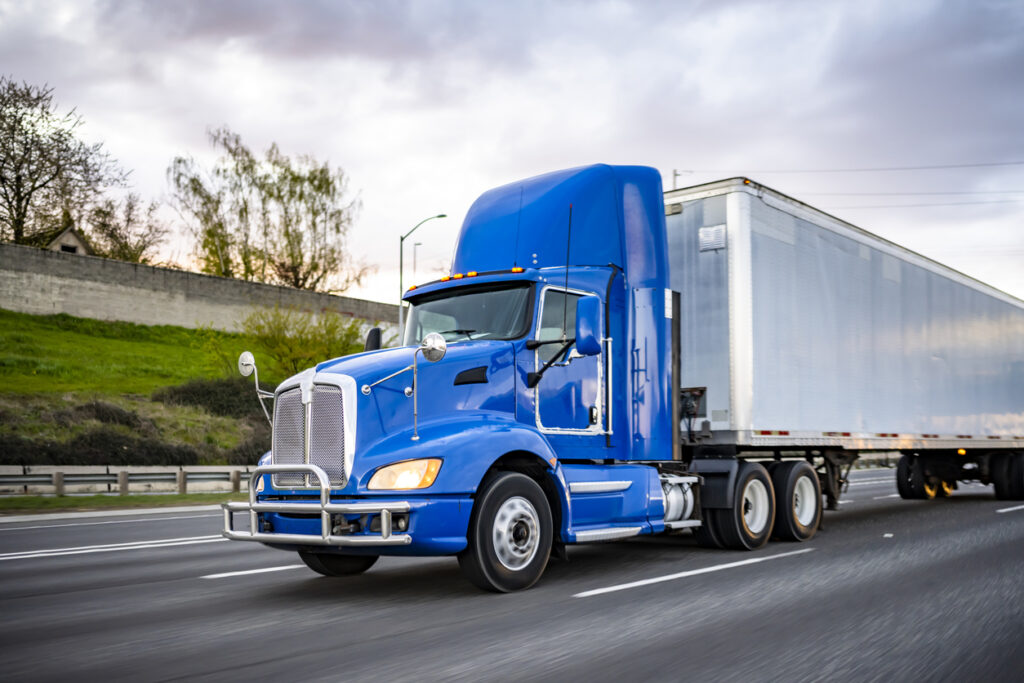
A combination of federal and state rules regulates trucking companies operating in St. Louis and throughout Missouri. The Federal Motor Carrier Safety Administration (FMCSA) regulates the trucking industry on a federal level. The Missouri Department of Transportation (MoDOT) sets additional state-specific standards.
Trucking laws cover critical areas such as driver qualifications, vehicle maintenance, hours of service, cargo securement, and size/weight limits. When trucking companies fail to comply with these rules, they pose a serious threat to public safety. Companies may be held legally accountable for injuries or damages resulting from their failure to comply with trucking regulations.
Key Regulations Trucking Companies Must Follow in Missouri
Federal and state trucking regulations in Missouri include:
Hours of Service (HOS)
Commercial drivers must follow the FMCSA hours of service rules for interstate trucking, including in Missouri.
The federal HOS regulations for transporting property include:
- 14-hour maximum on duty limit per 24-hour period
- 11-hour maximum driving limit within a 14-hour period
- Mandatory 30-minute break after driving eight cumulative hours without a 30-minute interruption
- Weekly limits of 60 hours in 7 days and 70 hours in 8 days
Missouri’s hours of service rules have adopted many of the federal rules for hours of service. The purpose of HOS rules is to reduce the risk of truck accidents caused by fatigued driving.
Size and Weight Limits
Missouri law sets truck size and weight limits that include, but are not limited to:
- Width limits at 102 inches (8.5 feet)
- Height limits range from 13.5 feet on most highways to 15 feet in certain commercial zones, including St. Louis
- Maximum gross vehicle weight of 80,000 pounds
Federal regulations also set size limits for commercial vehicles.
The federal weights for trucks include:
- 80,000 pounds gross vehicle weight
- 34,000 pounds tandem axle weight
- 20,000 pounds single axle weight
Oversize and overweight load permits must be obtained for vehicles that want to operate beyond the maximum weight and size restrictions. Overloaded trucks increase the risk of truck accidents for many reasons. Heavier trucks take longer to stop, require more room to operate, and may turn over more easily in certain situations.
Vehicle Maintenance and Inspections
Missouri statutes require every commercial motor vehicle and trailer to be maintained in a safe condition. Trucking companies must routinely inspect and maintain vehicles, focusing on safety-critical parts such as brakes, tires, steering, and lighting. Neglecting these maintenance responsibilities is a frequent cause of accidents and a violation of state and FMCSA requirements.
Driver Qualifications and Substance Testing
Operating a large truck requires specialized training and skills. Drivers must hold valid commercial driver’s licenses (CDLs), pass background checks, undergo medical certification, and submit to drug and alcohol testing before hiring and randomly during employment. Violations of these rules pose serious safety risks and legal consequences for trucking companies.
Cargo Securement
Loads must be properly loaded and secured to prevent shifting, falling, or leakage during transit. Improperly secured cargo contributes to numerous accidents and fatalities each year.
Traffic Laws and Local Enforcement
While federal and state agencies handle trucking-specific rules, local law enforcement enforces regular traffic laws, including speed limits, traffic signals, and DUI regulations. Violations of traffic laws can impact drivers’ CDLs and support liability claims after crashes.
Consequences of Violations of Trucking Regulations and Rules in Missouri
Ignoring trucking rules increases the risk of catastrophic accidents. Evidence of violations can be crucial in legal claims by accident victims.
Examples of violations include:
- Logs showing violations of hours of service rules
- Missed inspections
- Failure to secure cargo effectively
Trucking companies may face fines, license suspensions, and other penalties for violating trucking regulations. They may also face civil liability for injuries caused by their negligence.
What Should I Do After a Truck Accident in St. Louis, MO?
Large truck accidents cause horrific injuries and deaths. Negligence, including violations of trucking regulations, can lead to truck crashes. If you are injured in a truck accident, you could be entitled to economic and non-economic damages.
Steps to take after a truck accident to protect your rights include:
- Call 911 to report a truck accident to law enforcement and emergency services
- Do not imply that you could be responsible in any way for the cause of the truck accident
- Seek immediate medical treatment, even if you believe your injuries are minor
- Make a video and take pictures of the truck accident site if it is safe to do so
- Ask for names and phone numbers of witnesses and bystanders
Prompt legal advice from an experienced St. Louis truck accident lawyer is vital.
Contact Eason Car Accident and Personal Injury Lawyers for a Free Consultation
If you’ve been injured in a trucking accident in Missouri, call Eason Car Accident and Personal Injury Lawyers for a free consultation. We work quickly to preserve evidence and hold the responsible parties liable for their actions.
For more information, please contact Eason Car Accident and Personal Injury Lawyers to schedule a free consultation with a truck accident lawyer in St. Louis, MO, today.
Eason Car Accident and Personal Injury Lawyers – Richmond Heights Office
1034 S Brentwood Blvd Penthouse 1-C
Richmond Heights, MO 63117
(314) 463-4173